
Ceylon vs Bangkok Yellow Sapphire: Which Pukhraj Stone Is Right for You?
1. Origins and Heritage
Ceylon (Sri Lankan) Yellow Sapphire:
Sri Lanka is often referred to as the "Gem Island." For centuries, it has produced some of the world's finest Yellow Sapphires. Ceylon stones are famous for being mined ethically and naturally, often found in the gravel of riverbeds. They are prized for their "clean" energy and historical prestige.
Bangkok (Thai) Yellow Sapphire:
Thailand is the global hub for gemstone trading and treatment. While some stones are mined in Thailand (Chanthaburi), most "Bangkok Sapphires" are actually stones sourced from various parts of the world (like Madagascar or Africa) and then processed in Thai laboratories.
2. Color and Visual Appeal
Ceylon Yellow Sapphires:
-
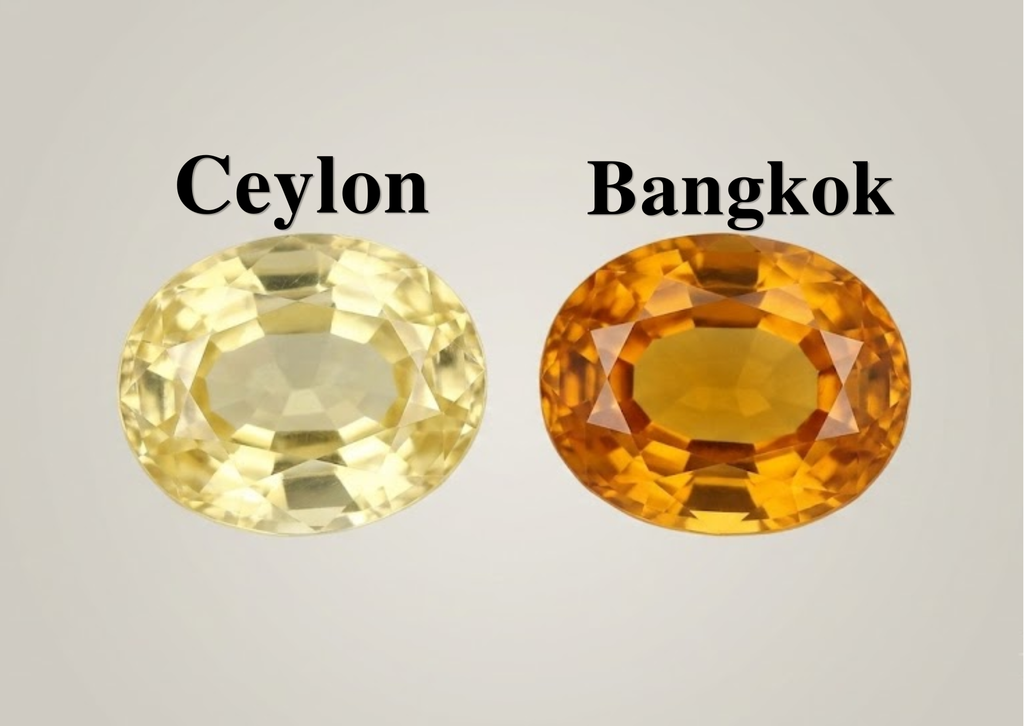
Color Range: These stones typically exhibit a bright, vivid lemon-yellow or canary-yellow hue.
-
Consistency: The color is usually distributed evenly throughout the stone.
-
Brilliance: Known for high transparency and a "glassy" luster, they reflect light beautifully, giving them a superior sparkle.
Bangkok Yellow Sapphires:
-
Color Range: Bangkok stones often lean toward a deeper, golden-yellow or even an orangish-yellow tint.
-
Saturation: While the color can be very intense, it sometimes appears slightly "heavy" or "glassy" due to the heat-treatment processes used to enhance the shade.
3. Treatment and Enhancements
This is the most critical technical difference between the two.
-
Ceylon Pukhraj: Most premium Ceylon sapphires are unheated and untreated. They are used in their raw, natural form, which is highly preferred for astrological purposes.
-
Bangkok Pukhraj: Almost all Bangkok sapphires undergo heat treatment or Beryllium diffusion. This process uses high temperatures and chemicals to improve the color and clarity of lower-quality stones. While they look stunning, they are not "natural" in the strictest sense.
4. Astrological Significance (The Pukhraj Factor)
In Vedic Astrology, the purity of the gemstone is paramount.
-
The Power of Ceylon: For those wearing Pukhraj for Jupiter’s blessings, Ceylon Yellow Sapphires are the gold standard. Because they are often unheated, they are believed to carry the "pure" vibrations of the planet. They are considered "Jyotish Quality" stones.
-
The Utility of Bangkok: While beautiful for jewelry, Bangkok sapphires are often considered less effective for astrology because the high-heat treatment is thought to "kill" the stone’s natural energy.
5. Pricing and Investment Value
-
Ceylon: Due to their rarity and natural state, Ceylon Yellow Sapphires command a premium price. A high-quality, unheated Ceylon Pukhraj is an investment that tends to appreciate over time.
-
Bangkok: These are far more affordable. If you are looking for a stunning piece of jewelry on a budget and aren't concerned with astrological rules, a Bangkok sapphire offers great "bang for your buck."
Summary Comparison Table
| Feature | Ceylon Yellow Sapphire | Bangkok Yellow Sapphire |
| Origin | Sri Lanka | Thailand (or processed there) |
| Treatment | Usually Unheated / Natural | Typically Heat-Treated / Diffused |
| Color | Bright Lemon Yellow | Golden / Deep Yellow |
| Astrology | Highly Recommended | Generally Avoided for Jyotish |
| Price | High / Premium | Budget-friendly |
Conclusion: Which One Should You Buy?
Choose a Ceylon Yellow Sapphire if:
-
You are wearing it for astrological reasons (Jupiter/Guru).
-
You want a natural, unheated gemstone.
-
You are looking for a long-term investment.
Choose a Bangkok Yellow Sapphire if:
-
You want a high-end fashion accessory.
-
You prefer a deep, golden color.
-
You are working within a specific budget and do not require astrological benefits.
Final Tip: Always insist on a laboratory certificate (such as GJEPC or IIGJ) to verify the origin and treatment of your stone. Whether it’s a Cushion, Oval, or Princess cut, a genuine Pukhraj is a treasure for a lifetime.
“At Tushar Gems, we provide 100% certified, astrologer-approved gemstones with 28+ years of trust — so you never risk wearing the wrong stone.”