The Opal Curse? Why You Should Stop Believing Gemstone Myths
The Origins of the "Opal Curse": Fiction Over Fact
Believe it or not, the "bad luck" associated with opals wasn't born from ancient mysticism, but rather from a 19th-century bestseller. In Sir Walter Scott’s 1829 novel, Anne of Geierstein, a character wears an opal that loses its color and "dies" when touched by holy water, shortly followed by the character’s demise.
The Impact:
-
Market Crash: Shortly after the book's publication, opal sales in Europe plummeted by nearly 50%.
-
Jeweler Frustration: Jewelers of that era found opals difficult to set because they are relatively soft (5.5 to 6.5 on the Mohs scale). If a stone cracked during setting, they blamed "bad luck" rather than the stone’s delicate physical properties.
Did You Know? Ancient Romans actually viewed opals as symbols of hope, purity, and good fortune. They believed the opal combined the beauties of all other gems—the red of ruby, the green of emerald, and the purple of amethyst.
Why Opals are Scientifically Spectacular
To understand why opals look the way they do, we have to look at their internal structure. Unlike most gemstones that have a crystalline structure, opals are amorphous silica.
-
Play-of-Color: This is the "magic" you see. It is caused by the diffraction of light through microscopic spheres of silica.
-
Hydration: Opals contain a small percentage of water (usually 3% to 10%). This is why they don't like extreme heat or sudden temperature changes—not because of a curse, but because of physics!
Debunking Common Gemstone Myths
| Myth | The Reality |
| Opals are bad luck if not your birthstone. | This is a 19th-century marketing myth. In reality, opals are for everyone! |
| Opals will crack if they get wet. | False. In fact, most opals (especially Australian) are non-porous and water won't hurt them. |
| Opals turn black when the wearer is ill. | Opals can change appearance if they absorb oils or chemicals, but they aren't medical diagnostic tools. |
How to Style and Care for Your Natural Opal
Because opals are "softer" gems, they require a bit of extra love. If you treat them right, they will last a lifetime.
-
Avoid Harsh Chemicals: Take off your opal jewelry before using bleach or household cleaners.
-
Clean Gently: Use warm soapy water and a soft brush. Never use an ultrasonic cleaner!
-
Storage: Store your opals separately from harder gems like diamonds or sapphires to prevent scratching.
-
Wear Them Often: Interestingly, the moisture from your skin can actually help keep some opals hydrated.
Why You Should Buy an Opal Today
Modern enthusiasts are reclaiming the opal. With the rise of unique engagement rings and boho-chic jewelry, the opal is having a massive resurgence. From the deep blues of Australian Black Opals to the glowing oranges of Mexican Fire Opals, there is a stone for every personality.
The Anatomy of a Myth: Where Did the Bad Luck Start?
Superstitions don't usually appear out of thin air. The "unlucky opal" myth is a fascinating mix of literature, business rivalry, and high-society gossip.
1. The Literary Villain: Sir Walter Scott
In 1829, Sir Walter Scott published the novel Anne of Geierstein. In the story, a character wears an enchanted opal that sparkles according to her mood. When a drop of holy water touches the gem, it loses its fire, and the character soon perishes.
The Reality: People at the time took fiction a little too seriously. Within months of the book's release, the opal market in Europe crashed.
2. The Diamond Trade Rivalry
In the late 19th century, massive opal deposits were discovered in Australia. This threatened the dominance of the diamond trade. Rumor has it that diamond merchants helped spread the "unlucky" rumors to keep customers buying diamonds instead of the more colorful (and often more affordable) natural Australian opals.
3. The Fragility Misconception
Early jewelers found opals difficult to work with. On the Mohs scale of mineral hardness, an opal sits at about 5.5 to 6.5. Because they are "softer" than diamonds, they can crack if hit hard or exposed to extreme heat. Instead of admitting a mistake in craftsmanship, old-world jewelers would often blame "bad luck" when a stone broke during setting.
The Science of "Fire": Why Opals Look Like Magic
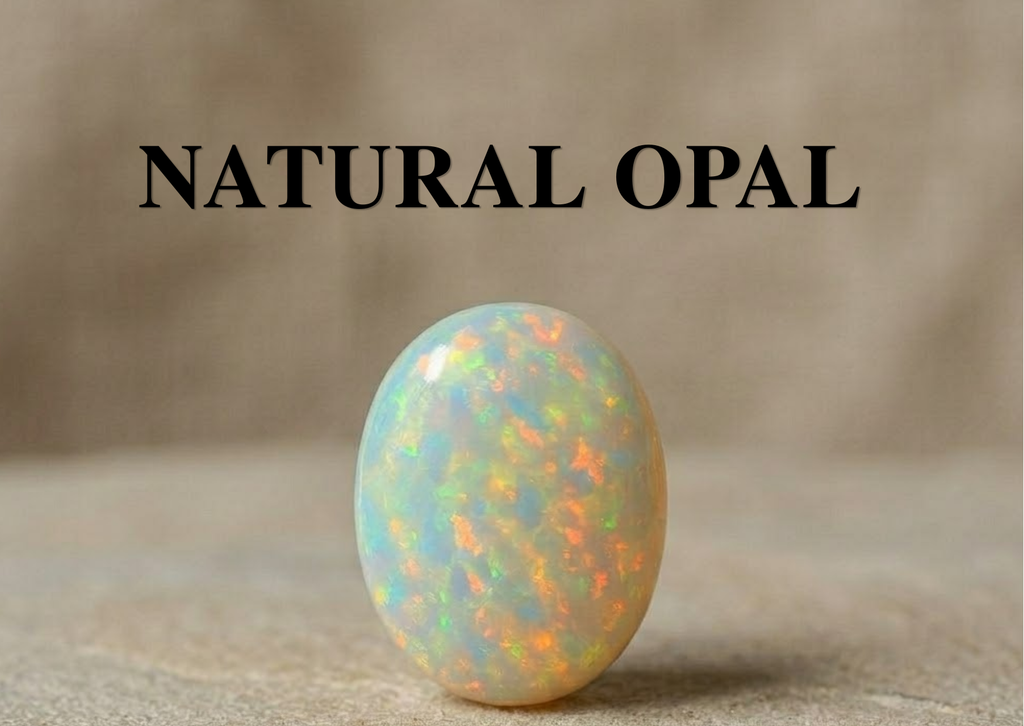
When you hold a natural opal under the light, it looks like a trapped galaxy. This isn't magic; it’s a rare geological phenomenon called Play-of-Color.
Opals are made of tiny spheres of amorphous silica. When these spheres are uniform in size and stacked neatly, they act like a prism. As light passes through the gaps between these spheres, it splits into the colors of the rainbow.
-
Small spheres produce blues and violets.
-
Large spheres produce the rarer reds and oranges (often seen in precious fire opals).
Choosing Your Stone: Types of Natural Opals
Not all opals are created equal. Depending on where they are mined and how they are formed, they offer vastly different aesthetics:
| Type | Characteristics | Value Factor |
| Black Opal | Dark body tone that makes colors "pop." | Highest value due to rarity. |
| White Opal | Light or milky body tone with pastel flashes. | Great for everyday boho jewelry. |
| Fire Opal | Transparent to translucent with bright orange/red body color. | Highly sought after for modern engagement rings. |
| Boulder Opal | Opal formed within ironstone boulders. | Unique, earthy, and very durable. |
How to Care for Your "Living" Gemstone
One reason myths persist is that people don't know how to care for their stones. Because opals contain a small percentage of water (usually between 3% and 10%), they are considered "living" gems.
-
Hydration is Key: Don't leave your opal in a safe-deposit box for years. The dry air can cause "crazing" (tiny surface cracks). Wearing your opal ring allows it to absorb moisture from the air and your skin.
-
Avoid Chemicals: Never wear your opal while cleaning with bleach or using harsh perfumes.
-
Temperature Control: Rapid shifts from freezing cold to boiling heat can cause the stone to expand and contract too quickly.
Modern Significance: Why We Love Opals in 2026
Today, the "curse" is officially dead. Fashion icons and jewelry designers have reclaimed the opal as a symbol of individuality and creativity. Since no two opals are ever identical, wearing one is a way to express a style that is uniquely yours.
-
Birthstone Power: As the October birthstone, it represents hope and purity.
-
Healing Crystals: In the world of crystal healing, opals are believed to amplify emotions and spark creativity.
-
Investment Value: As mines in Australia and Ethiopia become more depleted, the price of high-quality natural opals continues to rise, making them a smart investment for collectors.
Final Verdict: Should You Buy One?
The only "curse" associated with opals is the regret you’ll feel if you pass up a beautiful stone because of an old storybook. Whether it’s a minimalist opal pendant or a vintage-inspired opal engagement ring, these stones offer a depth of color that no other gem can match.
“At Tushar Gems, we provide 100% certified, astrologer-approved gemstones with 28+ years of trust — so you never risk wearing the wrong stone.”