Tanzanite vs. Sapphire: Which Blue Gemstone is a Better Investment for 2026?
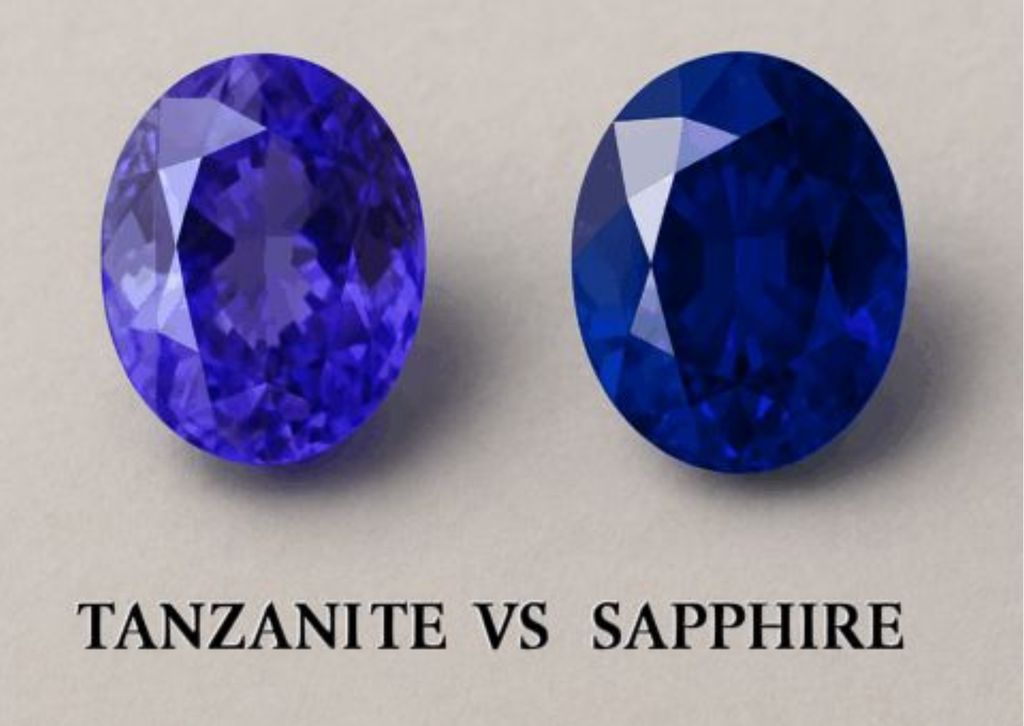
The allure of blue gemstones has dominated the luxury market for centuries. However, as we move through 2026, the conversation for investors and collectors has shifted. While Blue Sapphire remains the titan of the gemstone world, Tanzanite is rapidly emerging as a "generational" investment opportunity.
If you are looking to diversify your portfolio with tangible assets, choosing between these two stunning blue gems requires an understanding of market rarity, durability, and the shifting economic landscape of 2026.
1. The Rarity Factor: The "One-Generation" Gem vs. The Timeless Legend
When it comes to investment, scarcity is the primary driver of value.
-
Tanzanite: Often called the "Gemstone of the 20th Century," tanzanite is found in only one place on Earth: a 4km strip in the Mererani Hills of Tanzania. Geologists estimate that the mines may be depleted within the next decade. In 2026, as supply tightens and ethical sourcing regulations increase, high-quality Vivid Blue Tanzanite is seeing a significant price premium. It is truly a "finite" investment.
-
Sapphire: While sapphire is rare, it is found in multiple locations worldwide, including Kashmir, Sri Lanka (Ceylon), and Madagascar. However, the most investment-grade sapphires—specifically Unheated Royal Blue Sapphires—are becoming increasingly difficult to source. Their value is bolstered by a thousand-year history of prestige that tanzanite simply hasn't had the time to build yet.
2. Market Performance and Price Trends for 2026
In 2026, the gemstone market is leaning heavily toward traceability and certification.
| Feature | Tanzanite (Investment Grade) | Blue Sapphire (Investment Grade) |
| Current Market Trend | High Growth / Speculative | Stable / Premium Growth |
| 2026 Price Range | $600 – $3,500+ per carat | $3,000 – $15,000+ per carat |
| Hardness (Mohs Scale) | 6.5 – 7 (Requires care) | 9 (Extremely durable) |
| Investment Profile | High ROI potential due to depletion | Wealth preservation & steady appreciation |
3. Durability: A Critical Factor for Resale Value
An investment is only as good as the condition of the asset.
-
Sapphire is the second hardest natural mineral ($9$ on the Mohs scale), making it nearly scratch-proof. This means a sapphire ring can be worn daily for decades and still look "mint condition" for resale in 2040.
-
Tanzanite is softer ($6.5$ to $7$). While its color is breathtaking, it is more prone to scratching or cleavage if struck. For investment purposes, tanzanite is best kept in pendants, earrings, or as loose stones in a vault to maintain its flawless surface.
4. Color and Aesthetics: Pleochroism vs. True Blue
The visual appeal often dictates "liquidity"—how fast you can sell the stone.
-
Tanzanite's Secret Weapon: It is trichroic, meaning it shows three different colors (blue, violet, and burgundy) depending on the angle and lighting. This unique optical property makes it a favorite for modern jewelry designers.
-
Sapphire's Standard: The "Royal Blue" and "Cornflower Blue" of a high-end sapphire are the gold standards of the industry. Investors in 2026 are specifically seeking untreated (no-heat) sapphires, as these hold their value far better than heat-treated stones.
5. Ethical Sourcing and the 2026 Buyer
Today’s investors are not just looking at carats; they are looking at provenance.
-
Tanzanite has a consolidated supply chain, making it easier to track. The Tanzanian government has implemented strict "Block-C" mining regulations to ensure local communities benefit from the trade.
-
Sapphire sourcing is more fragmented. In 2026, a sapphire with a GIA or IIGJ certification stating its origin (e.g., Ceylon or Madagascar) and "No Heat" status is essential for any serious investment.
The Verdict: Which should you buy in 2026?
Choose Tanzanite if: You are looking for a "buy and hold" asset with the potential for a massive price surge once the mines are officially declared empty. It is a higher-risk, higher-reward play. Look for stones above 5 carats with deep saturation.
Choose Sapphire if: You want a "blue chip" investment that offers stability, prestige, and legendary durability. It is the safer choice for wealth preservation and long-term legacy planning.
I. The Geopolitical and Geological Landscape of 2026
Investment value is fundamentally tied to the "Story of Origin." In 2026, the narrative for these two stones has never been more different.
The "Tanzanite Depletion" Countdown
Tanzanite is a geological fluke. The conditions required to create this zoisite variety—intense heat and pressure involving vanadium—occurred only once in Earth's history in a tiny patch of land near Mount Kilimanjaro.
-
The 2026 Update: Mining depths have now reached levels where extraction is becoming prohibitively expensive. As the "Generation Gem," tanzanite is transitionary. For an investor, buying now is akin to buying oil in the early 20th century; you are holding a resource that the world is literally running out of.
The Sapphire "Provenance" Premium
Sapphire (Corundum) is found in various pockets of the world, but not all sapphires are created equal.
-
The 2026 Update: We are seeing a "Flight to Quality." While commercial-grade sapphires are abundant, Unheated Royal Blue Sapphires from Kashmir or Sri Lanka (Ceylon) are achieving record-breaking prices at auction houses like Sotheby’s and Christie’s. In 2026, the market is no longer interested in "just a blue stone"—it wants a stone with a documented history and no artificial enhancements.
Technical Comparison: Durability vs. Brilliance
An investor must consider the "Life Cycle" of the gemstone.
1. Hardness and Wearability
As mentioned, Sapphire sits at a 9 on the Mohs scale. It is the "forever" stone.
Investment Insight: Because sapphires are so durable, they have a higher "Resale Liquidity." A sapphire can be passed down through generations or sold in the secondary market without the need for expensive re-cutting or polishing.
Tanzanite, at 6.5 to 7, is more delicate. In 2026, we see tanzanite primarily being used in "High Jewelry" (worn occasionally) rather than "Everyday Jewelry." If you are investing in tanzanite, your strategy should be to keep it as a loose stone or set in a protective pendant to ensure it remains "Eye Clean" and scratch-free.
2. Optical Properties: The "Color Play"
-
Tanzanite’s Pleochroism: This is its greatest market strength. A single stone can flash violet, deep blue, and flashes of red. In the age of 4K digital marketing and social media showcases, the "color shift" of tanzanite makes it highly marketable to the younger, tech-savvy Gen Z and Millennial investors of 2026.
-
Sapphire’s Saturation: Sapphire offers a "True Blue." It doesn't shift; it glows. The "velvety" texture of a high-end sapphire is a result of tiny inclusions (silk) that scatter light, a feature that tanzanite cannot replicate.
How to Identify Investment-Grade Stones in 2026
If you are looking for ROI (Return on Investment), you cannot buy "commercial" grade. You must look for the Top 1%.
The Tanzanite Checklist:
-
Deep Saturation: Avoid pale lavenders. Look for "vivid" or "exceptional" saturation where the blue is so deep it almost looks velvety.
-
The Red Flash: High-grade tanzanites often show a "red/burgundy" flash under incandescent light. This is a hallmark of the finest material.
-
Size Matters: While 1-2 carat stones are great for jewelry, investment-grade tanzanite starts at 5 to 10 carats. Large, clean crystals are what will appreciate most as the mines close.
The Sapphire Checklist:
-
No Heat: This is non-negotiable for 2026 investors. A "heated" sapphire may be beautiful, but an "unheated" sapphire of the same color is worth 50-100% more.
-
Inclusion Profile: Look for "eye-clean" stones. While some "silk" is okay (and proves origin), heavy carbon spots or cracks (feathers) will kill the resale value.
-
Color Grade: Aim for "Royal Blue" (deep and vivid) or "Cornflower Blue" (bright and medium-toned).
2026 Market Forecast: Which will appreciate more?
-
Tanzanite: Likely to see a volatile but aggressive upward spike. As news of mine closures becomes mainstream, FOMO (Fear Of Missing Out) will drive prices up. It is a speculative asset with high reward potential.
-
Sapphire: Likely to see steady, inflation-beating growth. It is the "Gold" of gemstones. It won't double overnight, but it will never lose its value. It is a wealth-preservation asset.
“At Tushar Gems, we provide 100% certified, astrologer-approved gemstones with 28+ years of trust — so you never risk wearing the wrong stone.”