
Flawless Is Rare: Why Inclusions Are a Gemologist's Best Friend
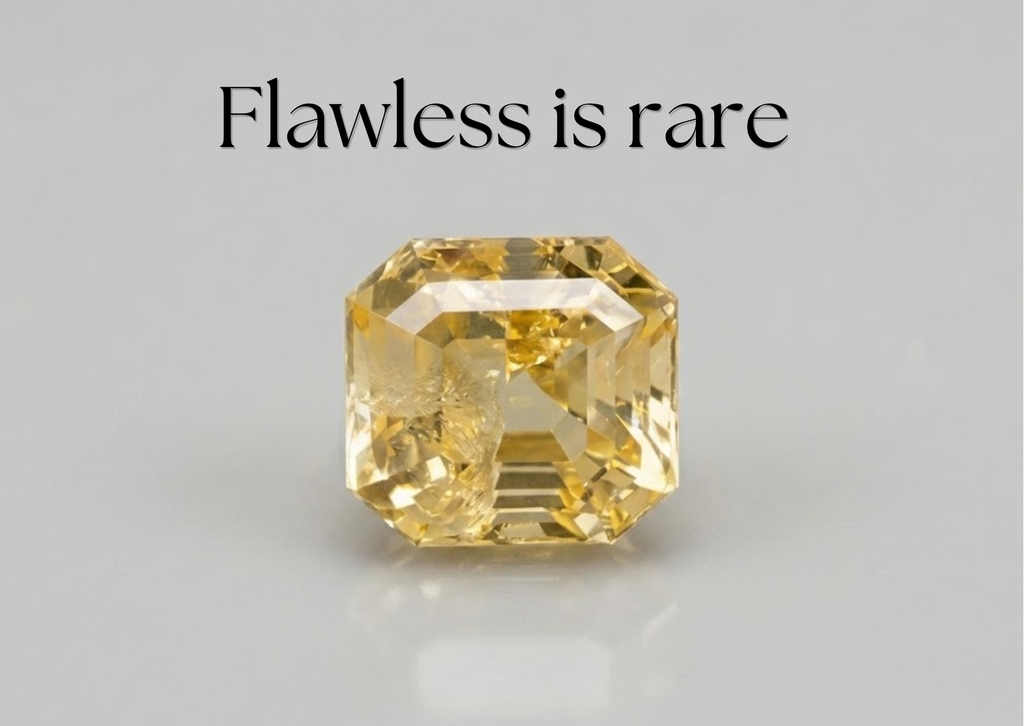
1. The Fingerprint of Authenticity
The most critical role of an inclusion is proving that a gemstone is natural. With the rise of sophisticated synthetic (lab-grown) gemstones and glass imitations, a perfectly "clean" stone can be a red flag.
-
Natural vs. Synthetic: Lab-grown stones often have specific growth patterns or metallic flux inclusions that differ from natural ones.
-
The "Proof of Life": Tiny needles, crystals, or "fingerprint" inclusions (liquid-filled tubes) are definitive evidence that the stone was formed by geological processes over millions of years, not in a factory.
2. Determining Geographic Origin
Did your Ruby come from Myanmar (Burma) or Mozambique? Is your Emerald from Colombia or Zambia? For a gemologist, inclusions are like a GPS.
-
Needles and Silk: Fine rutile needles (silk) in a Sapphire can suggest a Kashmiri or Burmese origin, which significantly impacts the stone's market value.
-
Three-Phase Inclusions: Colombian Emeralds are famous for "three-phase" inclusions—tiny cavities containing a liquid, a gas bubble, and a solid crystal. Seeing this under a microscope is like reading a stone’s birth certificate.
3. Detecting Heat Treatments and Enhancements
Most gemstones on the market today are treated to improve color or clarity. While these treatments are industry-standard, they must be disclosed.
-
Altered Inclusions: When a stone is heated to extreme temperatures, its internal inclusions often change. A "halo" around a crystal or "melted" silk tells a gemologist exactly what has been done to the stone.
-
Transparency and Trust: By studying these inclusions, gemologists can ensure that customers are getting exactly what they pay for—whether it is a completely unheated gemstone or a professionally treated one.
4. A Unique Artistic Identity
No two natural gemstones are identical, specifically because of their inclusions. These internal features create a unique "inner world." In stones like Moss Agate or Rutilated Quartz, the inclusions are the primary attraction, creating landscapes that look like forests or golden hair. Even in traditional stones like Sapphires or Emeralds, a beautiful inclusion can add character and a sense of "soul" to the piece.
5. Historical Narratives
Some inclusions contain minerals that are older than the gemstone itself. By analyzing these "protogenetic" inclusions, scientists and gemologists can understand the ancient conditions of the Earth’s crust. Buying a gemstone with an inclusion means you are owning a piece of prehistoric history.
1. The "Jardin" of the Emerald: Nature’s Garden
Take the Emerald, for example. In the world of Emeralds, inclusions are so expected and celebrated that they are called a "Jardin" (French for Garden).
-
The Beauty of Complexity: These mossy, vine-like patterns inside the stone prove its organic origin.
-
A Collector's Mark: A completely clean Emerald is so rare that it is often assumed to be glass or synthetic until proven otherwise. The "Jardin" makes each Emerald a unique piece of art.
2. Identifying the "Unheated" Treasure
For investors, Unheated Sapphires and Rubies are the holy grail. How does a gemologist confirm a stone hasn't been tampered with by high-heat or chemicals?
-
Microscopic Clues: Intact, delicate rutile "silk" or sharp, unaltered crystal inclusions are the only way to prove a stone is 100% natural and unheated.
-
Value Boost: Because these inclusions prove the stone's natural state, they can actually increase the market value by 50% to 100% compared to treated stones.
3. The Science of the "Inner World"
When you look into a gemstone under a microscope, you aren't just looking at a rock; you are looking at a time capsule.
-
Host Crystals: Sometimes, a small diamond is trapped inside a sapphire, or a tiny garnet is found inside a diamond.
-
Geological History: These inclusions tell us about the temperature and pressure of the Earth millions of years ago. To a collector, owning a stone with a visible "host crystal" is like owning a museum piece.
4. Security and Identification
Think of inclusions as a natural serial number.
-
Anti-Theft: If your jewelry is ever lost or stolen, your stone’s specific inclusion pattern is the most reliable way to identify it.
-
Mapping: Most high-end lab reports (like GIA or IIGJ) include a "plot" or a map of these inclusions. This ensures that the stone you bought is the same stone you receive after it has been set into a ring or pendant.
“At Tushar Gems, we provide 100% certified, astrologer-approved gemstones with 28+ years of trust — so you never risk wearing the wrong stone.”