The 30-Year Countdown: Why Tanzanite Is the Rarest Stone You Can Own
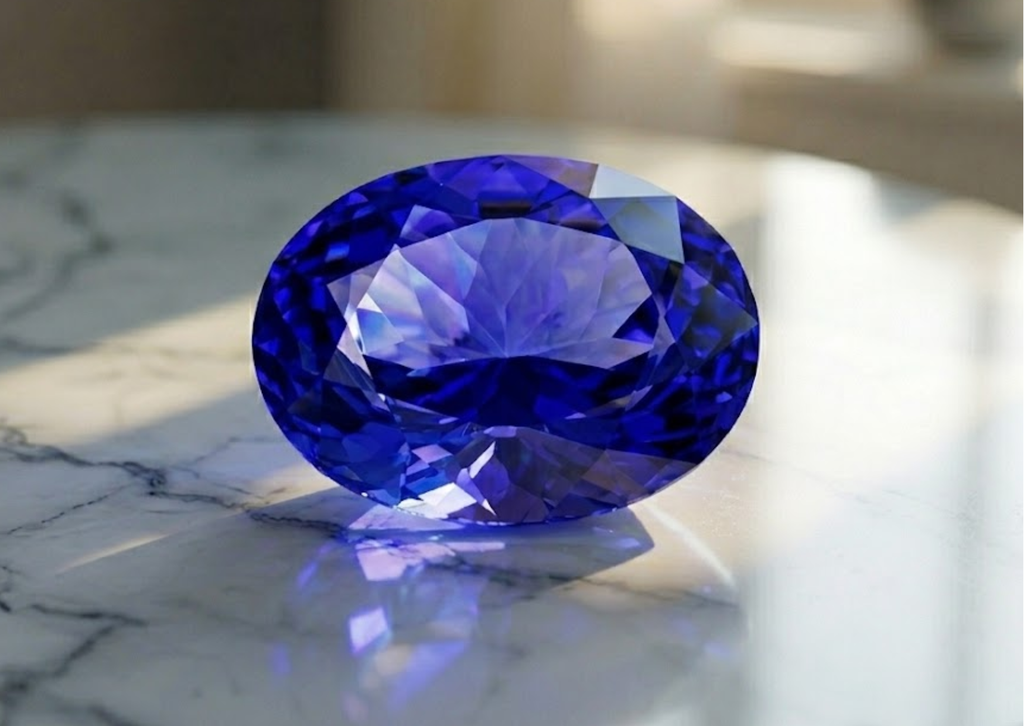
That stunning deep blue-violet gem in your image isn't just a piece of jewelry; it’s a ticking clock. While diamonds are found across multiple continents, Tanzanite is found in only one place on Earth: a small four-kilometer strip at the foothills of Mount Kilimanjaro in Tanzania.
Geologists estimate that at current production rates, the mines will be depleted within the next 25 to 30 years. We are officially the last generation of "first owners." Here is why Tanzanite is the ultimate "buy it now" gemstone.
1. The "Generation Stone": A Finite Legacy
Unlike lab-grown stones or even gold, Tanzanite cannot be "found" elsewhere. The geological conditions that created it—a massive tectonic shift involving intense heat and specific mineral compositions—were so unique that the chances of finding another deposit are cited as one in a million.
When the Merelani Hills run dry, the only way to acquire Tanzanite will be through estate sales and auctions. This "finite supply" makes it a high-yield investment gemstone.
2. The Trichroic Magic
Tanzanite is famous for its trichroism. This means that in its rough state, the stone radiates three different colors: blue, violet, and burgundy. Even after precision cutting, a high-quality Tanzanite will shift colors depending on the lighting and the angle you view it from.
-
Daylight: Expect a vivid, royal blue.
-
Incandescent light: Watch it transform into a deep, velvety violet.
3. Rarity Beyond Diamonds
It is a common misconception that diamonds are the rarest stones. In reality, Tanzanite is 1,000 times rarer than a diamond. While diamonds are prized for their sparkle and hardness, Tanzanite is prized for its soul-stirring color—a saturation that few other gems, including fine sapphires, can match.
The Tanzanite Buyer’s Guide: What to Look For
If you are looking to add this "vanishing" gem to your collection, you need to understand the 4Cs of Tanzanite:
| Feature | What to Look For |
| Color | The deeper the blue or violet, the higher the value. Look for "vivid" or "exceptional" saturation. |
| Clarity | High-quality Tanzanite should be "eye-clean" (no visible inclusions). |
| Cut | A great cut maximizes light return and shows off the color-shifting properties. |
| Carat | Large Tanzanites (over 5 carats) are significantly rarer and their price per carat jumps exponentially. |
Is Tanzanite a Good Investment?
As the 30-year countdown continues, the economic principle of supply and demand kicks in. As the supply nears zero, the demand (and price) for high-grade stones is expected to skyrocket. Collectors are currently snatching up "Investment Grade" Tanzanite—stones with a deep "D-Block" blue—knowing they are holding a piece of geological history.
Caring for Your Gem
Tanzanite sits at a 6.5 to 7 on the Mohs scale. While it’s durable enough for rings and necklaces, it’s a "special occasion" stone.
-
Avoid: Ultrasonic cleaners or harsh chemicals.
-
Clean with: Warm soapy water and a soft brush.
Final Thoughts
Owning a Tanzanite is like owning a piece of a star that fell in only one spot on Earth. Whether you are buying it for its mesmerizing beauty or its potential as a legacy asset, the message is clear: the clock is ticking.
SEO Keywords Included: Tanzanite rarity, investment gemstones, Merelani Hills, blue-violet gemstone, Tanzanite vs Diamond, 4Cs of Tanzanite, rare African gems, Tanzanite mining depletion.
1. The "One-Location" Wonder
The primary reason for Tanzanite’s extreme rarity is its geographical origin. While diamonds are mined in dozens of countries across multiple continents, Tanzanite is found in only one place on the entire planet: a tiny 4km strip of land at the base of Mount Kilimanjaro in Tanzania, known as the Merelani Hills.
The tectonic conditions required to create this stone—a specific mix of heat, pressure, and the presence of the element Vanadium—were so unique that scientists estimate the chances of finding another Tanzanite deposit elsewhere are less than one in a million.
2. Rare vs. Common: The Diamond Comparison
It is a common marketing myth that diamonds are the rarest stones. In reality, Tanzanite is 1,000 times rarer than a diamond.
-
Diamonds: Abundant enough that they are found globally and even produced in labs.
-
Tanzanite: A geological fluke. Once the Merelani mines are empty, there is no "Plan B." No other country has it, and no other mine is waiting to be opened.
3. The Phenomenon of Trichroism
What you see in a high-quality Tanzanite (like the oval-cut gem in your image) is a mesmerizing display of Trichroism. This is a rare optical property where the gemstone displays three different colors depending on the angle of light:
-
Deep Royal Blue
-
Velvety Violet
-
Burgundy/Red flashes
This color-shifting ability makes it a favorite for high-end jewelry designers who want to create pieces that look different in daylight versus candlelight.
4. How to Identify Investment-Grade Tanzanite
Not all Tanzanite is created equal. If you are looking for a stone that will appreciate in value as the 30-year countdown ends, look for these specific traits:
-
Saturation is King: The most valuable stones are "vivid" or "exceptional" in color. Pale blue or light lilac stones are common; deep, saturated "D-Block" blues are the collectors' choice.
-
Clarity: Unlike emeralds, which often have "gardens" (inclusions), Tanzanite should be eye-clean.
-
The Cut: Look for precision faceting that minimizes "windowing" (where light leaks through the center) and maximizes the violet-blue brilliance.
5. Ethical Sourcing and the "Tanzanite One" Legacy
The Tanzanian government has taken significant steps to protect this national treasure. By installing walls around the mining perimeter and enforcing strict export regulations, the industry ensures that the local economy benefits from every carat. Buying a certified Tanzanite means supporting a legacy that is purely African.
Conclusion: A Vanishing Legacy
In 30 years, you won't be able to walk into a boutique and buy a newly mined Tanzanite. It will become an "estate-only" gem, passed down from parents to children. Owning one today isn't just a fashion statement—it’s owning a piece of geological history that is slowly disappearing.
Don't wait for the mines to close. The time to own the rarest blue on Earth is now.
“At Tushar Gems, we provide 100% certified, astrologer-approved gemstones with 28+ years of trust — so you never risk wearing the wrong stone.”