Why Emeralds Are So Rare
The Green Enigma: Why Natural Emeralds are More Rare than Diamonds
Emeralds have captivated humanity for millennia, from the legendary mines of Cleopatra to the high-fashion runways of today. While many people assume diamonds are the pinnacle of rarity, the truth is that fine-quality natural emeralds are significantly scarcer.
This blog explores the geological miracles, historical prestige, and market factors that make the emerald a true "gem among gems."
1. A Geological Impossible: The Origin of Emeralds
The primary reason emeralds are so rare is that they shouldn't technically exist. Emeralds are a variety of the mineral Beryl. For a beryl crystal to turn that signature vivid green, it must interact with specific trace elements: Chromium or Vanadium.
-
The Conflict: Chromium is typically found deep in the Earth's crust, while Beryl is found in the upper continental crust.
-
The Miracle: It takes massive tectonic shifts or volcanic activity to bring these two incompatible elements together. This geological "handshake" happens in very few places on Earth, making natural emerald deposits exceptionally limited.
2. The "Jardin": Nature’s Fingerprint
Unlike diamonds, which are prized for "flawlessness," emeralds are almost always born with internal inclusions. These are known as the "Jardin" (French for garden), because they look like mossy, leafy branches inside the stone.
-
Rarity of Clarity: Finding an emerald that is eye-clean (free of visible inclusions) is a statistical anomaly.
-
Authentication: These inclusions are actually a mark of authenticity. They prove the stone is a natural emerald and not a synthetic lab-grown imitation.
3. Iconic Cuts: The Emerald Cut
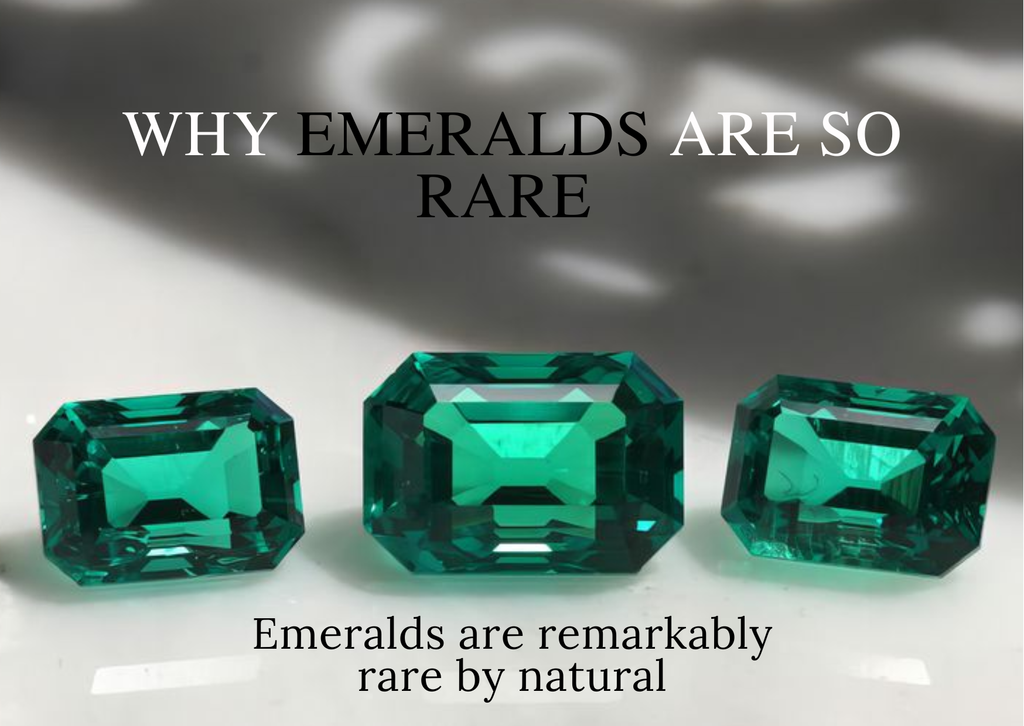
The "Emerald Cut"—the rectangular step-cut seen in the image—was specifically designed for this gemstone. Because emeralds are more brittle than sapphires or diamonds, this cut protects the stone from chipping while maximizing its deep, lush color. A high-quality Cushion Cut or Octagon Cut emerald is a testament to a master lapidary’s skill.
4. Comparison: Natural vs. Synthetic
In today's market, "Original vs Fake" is a major concern for investors. Synthetic emeralds can be grown in labs, but they lack the complex chemical "birthmarks" of a stone formed over millions of years.
Pro Tip: Always look for certification verifying the stone is unheated or has "minor oil" only, as these are the most valuable and investment-grade pieces.
5. Why the Global Luxury Market is Obsessed
Emeralds are currently dominating global luxury fashion trends. Collectors are moving away from traditional diamonds toward colored gemstones that offer a "story."
-
Investment Value: Over the last decade, the price of high-quality emeralds has outpaced many other luxury assets.
-
Status Symbol: From royal crowns to Hollywood red carpets, the emerald represents a level of sophisticated taste that is understated yet undeniable.
Conclusion: A Legacy in Green
Owning a natural emerald is like owning a piece of the Earth’s chaotic history. Their rarity is not just a marketing claim—it is a geological fact. Whether you are looking for an emerald engagement ring or a luxury gemstone investment, you are choosing a stone that is truly one in a billion.
-
Primary Keywords: Natural Emeralds, Rare Gemstones, Luxury Jewelry Trends, Emerald Cut.
-
Secondary Keywords: Untreated Emeralds, Gemstone Investment, Beryl Mineral, Jardin Inclusions, High-End Jewelry, Original vs Fake Gemstones.
-
Long-Tail Keywords: Why are emeralds so expensive? How to identify a natural emerald, Best gemstone for investment 2026.
A Geological "Impossible" Match
The primary reason emeralds are so rare lies in their chemical DNA. Emeralds are a variety of the mineral Beryl. For a beryl crystal to transform into that signature "emerald green," it must be infused with trace amounts of Chromium, Vanadium, or Iron.
The problem? Chromium and Beryl are geological enemies. Beryl is typically found in the Earth's crust, while Chromium is found much deeper in the mantle. Under normal circumstances, they never meet. It takes massive tectonic shifts, intense pressure, and specific hydrothermal conditions to force these elements together. This "impossible" meeting occurs in very few places on Earth, such as the lush mines of Colombia, Zambia, and Brazil.
The "Jardin": Nature’s Authenticity Certificate
If you look closely at a natural emerald, you will see tiny internal fractures, bubbles, and crystals. In the trade, this is called the "Jardin" (the French word for garden).
-
Why it matters: Unlike diamonds, where "flawlessness" is the gold standard, a Jardin is expected in an emerald.
-
The Rarity of Clarity: Finding an emerald that is "eye-clean" (appearing clear to the naked eye) is statistically a one-in-a-million event.
-
Original vs. Fake: These inclusions are the easiest way to distinguish a natural stone from a synthetic lab-grown imitation. While a fake looks "perfect," a natural emerald tells the story of its violent birth through its unique internal "garden."
The Art of the Cut: Maximizing the Glow
Because emeralds are naturally more brittle than sapphires or diamonds, they require expert craftsmanship to survive the cutting process.
-
The Emerald Cut: This rectangular step-cut (as seen in the image) was specifically engineered to protect the stone’s corners and showcase the depth of its color.
-
Cushion and Oval Cuts: When a rough stone possesses exceptional clarity, lapidaries may use a Cushion Cut or Oval Cut to enhance its brilliance and maximize the "carat weight," which significantly increases its market value.
Investment Potential in the 2026 Market
Is gemstone jewelry the future of global luxury? The answer is a resounding yes. As investors look for "portable wealth," the demand for unheated and untreated gemstones has skyrocketed.
-
Value Retention: High-quality emeralds have historically outperformed many traditional stocks.
-
Ethics and Origin: Today’s buyers prioritize natural and ethically sourced stones. A certified, unheated emerald from a reputable source is not just jewelry—it is a legacy asset.
Identifying Quality: 7 Secrets Sellers Don’t Want You to Know
When shopping for these green treasures, keep these factors in mind to ensure you are getting an authentic luxury product:
-
Color over Clarity: In emeralds, a rich, "electric" green is more valuable than a pale, clear stone.
-
The Oil Factor: Most emeralds are treated with colorless oil to fill surface-reaching fissures. Stones with "Minor Oil" or "No Oil" are the rarest.
-
Origin Matters: A "Muzo" Colombian emerald or a deep green Zambian emerald often commands a premium.
-
Weight vs. Size: Because emeralds have a lower density than diamonds, a 1-carat emerald will actually look larger than a 1-carat diamond.
-
Certification: Always demand a lab report from a recognized institution (like GIA or IGI).
-
The "Red" Test: Under a Chelsea Filter, many natural emeralds will show a pinkish-red hue due to their chromium content.
-
Stability: Always ask if the stone has been "resin-filled"—natural oil is acceptable, but heavy resins can decrease the stone's long-term value.
Conclusion: More Than Just a Stone
An emerald is a piece of history that took millions of years to form. From its impossible geological origins to its status as a luxury fashion icon, the emerald remains a symbol of status, healing, and rebirth. Whether it is set in an engagement ring, a pendant, or a bracelet, a natural emerald is a rare piece of the Earth that you can carry with you.
“At Tushar Gems, we provide 100% certified, astrologer-approved gemstones with 28+ years of trust — so you never risk wearing the wrong stone.”