October Birthstone: Opal
The Ultimate Guide to October’s Birthstone: The Mesmerizing Opal
The world of gemstones is filled with vibrant colors and ancient legends, but few stones capture the imagination quite like the Opal. As the primary birthstone for October, the opal is celebrated for its unique "play-of-color," a phenomenon where the stone displays a shifting kaleidoscope of hues when viewed from different angles.
Whether you are an October baby or a gemstone collector, understanding the depth, history, and care of this ethereal stone is essential.
What Makes Opal So Unique?
Unlike most gemstones that have a crystalline structure, opals are amorphous, meaning they do not have a fixed shape. They are composed of tiny spheres of silica arranged in a grid-like pattern. When light passes through these spheres, it diffracts, creating the stunning flashes of pink, blue, green, and gold that we call play-of-color.
Types of Opals
-
White or Light Opal: The most common variety, featuring a translucent to semi-translucent body color with vibrant flashes.
-
Black Opal: The rarest and most valuable, with a dark body tone that makes the colors "pop" with intense brilliance.
-
Fire Opal: Found primarily in Mexico, these are known for their warm body colors ranging from yellow to deep orange-red.
-
Boulder Opal: Unique stones that remain attached to their host rock (ironstone), giving them a rugged yet beautiful appearance.
Symbolism and Meaning: A Stone of Creativity
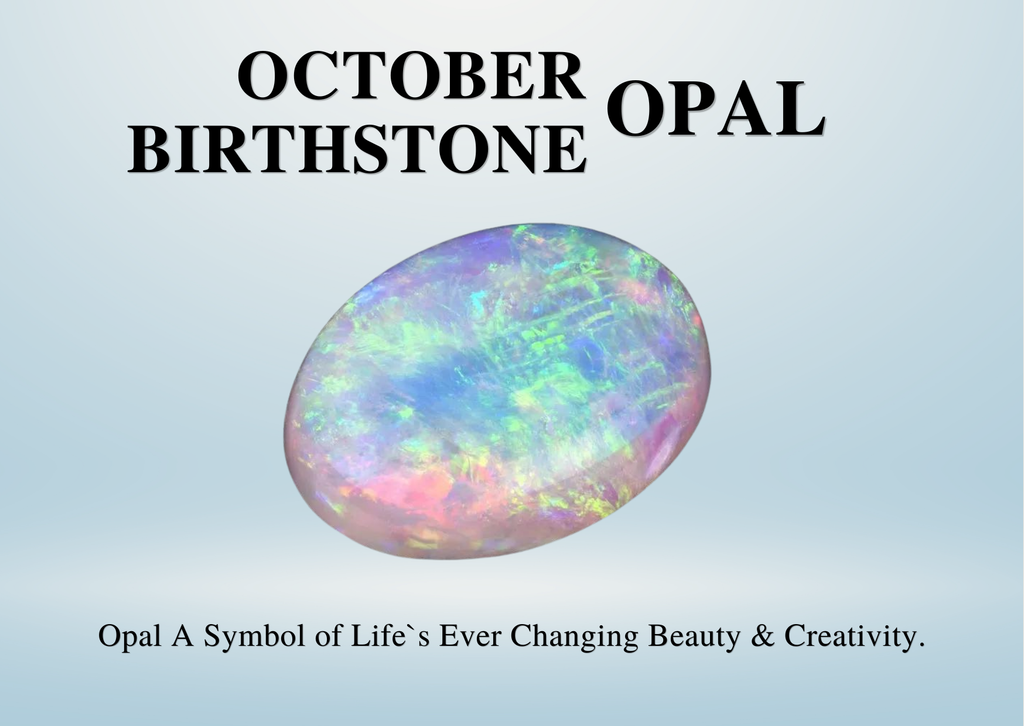
As noted in your beautiful banner, the Opal is a Symbol of Life’s Ever-Changing Beauty & Creativity. Historically, it has been associated with:
-
Inspiration: Ancient Greeks believed opals gave their owners the gift of prophecy and protection from disease.
-
Emotional Healing: Many believe the stone intensifies emotions and releases inhibitions, encouraging freedom and independence.
-
Hope and Purity: In many cultures, the white opal is a symbol of luck and hope.
How to Buy High-Quality Opals
When shopping for an opal, keep these professional factors in mind to ensure you are getting a genuine, high-quality gemstone:
-
Color Intensity: Look for stones with bright, vivid flashes rather than dull or "dead" spots.
-
Pattern: Patterns like "Harlequin" or "Pinfire" significantly affect the value and aesthetic appeal.
-
Transparency: Depending on the type, look for a clear, milky, or dark background that enhances the color play.
-
Certification: Always ask for a lab certificate to verify the stone’s origin and to ensure it is a natural, unheated gemstone.
Caring for Your October Birthstone
Opals are delicate, ranking between 5.5 and 6.5 on the Mohs scale. They contain a significant amount of water (up to 21%), which means they require special care:
-
Avoid Harsh Chemicals: Never use ultrasonic cleaners or harsh soaps.
-
Moisture Balance: Extreme heat or sudden changes in temperature can cause "crazing" (fine cracks).
-
Storage: Store your opal jewelry in a separate soft pouch to prevent scratches from harder stones like diamonds or sapphires.
SEO Keywords Included:
October Birthstone, Natural Opal Gemstone, Opal Meaning and Symbolism, Precious Black Opal, White Opal Jewelry, Gemstone Play-of-Color, Unheated Natural Gemstones, October Birthday Gift, High-Quality Opal Guide.
The Science Behind the "Play-of-Color"
What makes an opal truly special is a phenomenon known as play-of-color. Unlike rubies or sapphires that get their color from chemical impurities, the opal’s color is structural.
Opals are composed of millions of sub-microscopic silica spheres. When these spheres are uniform in size and arranged in a perfect grid, they diffract light. As light passes through, it splits into various colors.
-
Small spheres produce blues and violets.
-
Larger spheres produce the rarer and more expensive reds and oranges.
Because of this unique structure, no two opals are ever exactly alike. When you own an opal, you own a unique fingerprint of the earth.
A Journey Through History and Folklore
The word "Opal" is believed to be derived from the Sanskrit word Upala, meaning "precious stone," and later the Greek Opallios, meaning "to see a change in color."
-
Ancient Rome: Romans considered the opal a symbol of hope and purity. Pliny the Elder, a famous Roman scholar, described the opal as having the "fire of the carbuncle, the brilliant purple of the amethyst, and the sea-green of the emerald—all shining together in an incredible union."
-
The Middle Ages: It was believed that the opal could render its wearer invisible, leading it to be called the Patronus furum (patron of thieves).
-
Arabic Legends: Ancient Arabians believed that opals fell from the sky in flashes of lightning, which explained their internal fire.
Varieties of the October Birthstone
Not all opals are created equal. Depending on where they are mined and their internal structure, they fall into several categories:
-
Black Opal: These are the rarest and most prized. The dark body tone (black, dark gray, or deep blue) acts as a perfect canvas, making the play-of-color appear incredibly vivid and neon-like.
-
White or Light Opal: These feature a milky or white body color. They are the most common and offer a softer, more romantic pastel glow.
-
Fire Opal: Found predominantly in Mexico, these stones are unique because they are valued for their transparent body color (vibrant yellows, oranges, and reds) rather than their play-of-color.
-
Boulder Opal: These are mined with the host ironstone still attached to the back. This naturally dark backing enhances the color and adds a rugged, organic beauty to the jewelry.
Symbolism: Life’s Ever-Changing Beauty
As a Symbol of Life’s Ever-Changing Beauty & Creativity, the opal is a powerful spiritual tool. It is often used to:
-
Boost Creativity: It is said to break through mental blocks and allow the wearer’s inner artist to shine.
-
Emotional Balance: Many believe it acts as an emotional amplifier, helping the wearer face their true feelings and find inner peace.
-
Protection: In modern crystal healing, it is used to shield the wearer from negative energy and promote a sense of security.
Buyer’s Guide: How to Choose a Genuine Opal
If you are looking to purchase a natural opal for an October birthday or an anniversary, keep these SEO-optimized tips in mind:
-
Look for Brightness: A dull opal is less valuable. The "brilliance" of the color flashes is the most important factor in its price.
-
Check for Cracks (Crazing): Because opals contain water, they can dry out and crack if not handled correctly. Inspect the stone under a light for any tiny spider-web cracks.
-
Ask for Lab Certification: Ensure you are buying a natural, unheated gemstone. Reputable labs (like IIGJ or GIA) provide certifications that prove the stone is not a synthetic "lab-grown" version or a "doublet" (a thin slice of opal glued to a backing).
-
Naturals vs. Doublets/Triplets: A solid opal is cut from a single piece of stone. Doublets and Triplets are layers of opal glued to other materials. Always ask for a "Solid Opal" for the best investment.
Care and Maintenance
Opals are delicate gems (5.5–6.5 on the Mohs scale). To keep your jewelry shining for a lifetime:
-
Avoid Ultrasonic Cleaners: The vibrations and heat can cause the stone to crack.
-
Clean with Care: Use a soft cloth and mild soapy water. Never soak your opal for long periods.
-
Store Separately: Store your opal in a soft pouch away from harder stones like diamonds or sapphires to avoid scratches.
“At Tushar Gems, we provide 100% certified, astrologer-approved gemstones with 28+ years of trust — so you never risk wearing the wrong stone.”