Emerald Inclusions Explained: Types and Effects
Emeralds are among the most coveted gemstones in the world, yet they are almost never "perfect" in the traditional sense. While a diamond’s value often depends on its clarity, an emerald is judged by a different standard. In the world of gemology, emerald inclusions are not just flaws—they are a gemstone’s DNA.
Understanding the "Jardin"
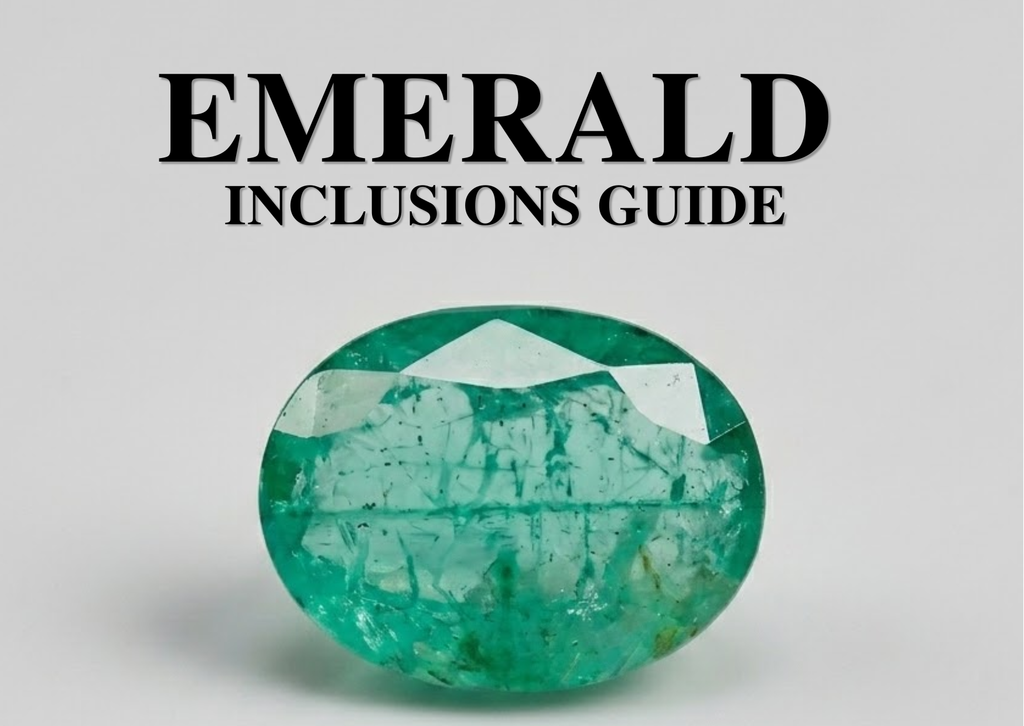
Unlike other gemstones where inclusions are seen as "dirt" or "cracks," emerald inclusions are poetically referred to as the Jardin (French for "garden"). This is because the internal fractures, bubbles, and crystals often resemble moss, ferns, or tiny branches.
A natural emerald without inclusions is incredibly rare. If an emerald appears perfectly clear to the naked eye, it is either exceptionally expensive or likely a synthetic or glass imitation.
Common Types of Emerald Inclusions
Inclusions tell the story of how an emerald formed deep within the Earth under intense heat and pressure. Here are the most common types found in natural stones:
1. Fissures and Fractures
These are the most common inclusions. Fissures are tiny hairline cracks that reach the surface or stay internal. Because emeralds are naturally brittle (scoring 7.5 to 8 on the Mohs scale), these fractures are a byproduct of their geological birth.
2. Three-Phase Inclusions
This is the "smoking gun" for identifying natural Colombian emeralds. A three-phase inclusion is a tiny cavity that contains:
-
A liquid (usually saline water)
-
A gas (a small bubble)
-
A solid (usually a tiny crystal of halite)
3. Mineral Crystals
Sometimes, other minerals get trapped inside the emerald as it grows. You might see tiny specks of Pyrite (Fool's Gold), Calcite, or Mica. These crystals can help gemologists determine the exact mine the stone originated from.
4. Growth Tubes
These look like tiny needles or straws running parallel to each other. They occur when the crystal grows rapidly, leaving behind hollow "tubes" that can affect how light travels through the stone.
How Inclusions Affect Value and Durability
The impact of an inclusion depends on its location, size, and type.
-
Color and Brilliance: If inclusions are too dense, they can make the stone look "sleepy" or opaque, blocking light and reducing the stone’s vibrant green glow. However, a light "Jardin" can actually soften the color and give the emerald a velvety texture.
-
Durability: Inclusions that reach the surface are called "surface-reaching fissures." These can make the stone more prone to chipping or cracking if hit against a hard surface.
-
Value: In the jewelry market, an emerald with high transparency and minimal visible inclusions commands the highest price. However, a stone with a beautiful "garden" and vivid green color will always be more valuable than a pale, clear stone.
Because almost all emeralds have surface-reaching fissures, it is a standard industry practice to treat them with Cedarwood oil or colorless resins. The oil seeps into the fractures, making them less visible and improving the stone's overall clarity. When buying an emerald, always ask for a lab certificate (like GJEPC or IIGJ) to confirm whether the oiling is "Minor," "Moderate," or "Significant."
Summary Checklist for Buyers-
Check for Transparency: Look for a balance between natural inclusions and clarity.
-
Avoid "Carbon Spots": Large black inclusions can detract from the beauty more than white or transparent ones.
-
Request Certification: Ensure the stone is natural and check the level of clarity enhancement.
-
Set with Care: Choose a protective setting, like a bezel or a halo, to safeguard the stone’s edges.
-
Colombian Emeralds: Historically the gold standard. They are known for their warm, intense green and the famous "three-phase inclusions." Stones from the Muzo or Chivor mines are highly sought after by collectors.
-
Zambian Emeralds: These often have a cooler, more bluish-green undertone and tend to be slightly more "clean" (fewer inclusions) than their Colombian counterparts. They offer incredible brilliance and are a favorite for modern, high-fashion jewelry.
-
Ethiopian Emeralds: A newer player in the market, these stones often rival Colombian quality with a bright, neon-green saturation that has taken the industry by storm.
-
Emerald Inclusions Explained
-
Natural Emerald Jardin
-
Types of Emerald Inclusions
-
Three-Phase Inclusions in Emeralds
-
Emerald Clarity Enhancement
-
Gemstone Durability
-
Colombian Emerald Characteristics
-
Emerald Oil Treatment
-
IIGJ Certified Emeralds
-
Gemology for Jewelry Design
“At Tushar Gems, we provide 100% certified, astrologer-approved gemstones with 28+ years of trust — so you never risk wearing the wrong stone.”