
Difference Between Colombian , Zambian , and Brazilian Emeralds
1. Colombian Emeralds: The Gold Standard
Colombia is widely regarded as the premier source for the world's finest emeralds. Mined primarily in the Muzo, Chivor, and Coscuez regions, these stones are legendary for their "oil-drop" appearance and incomparable glow.
-
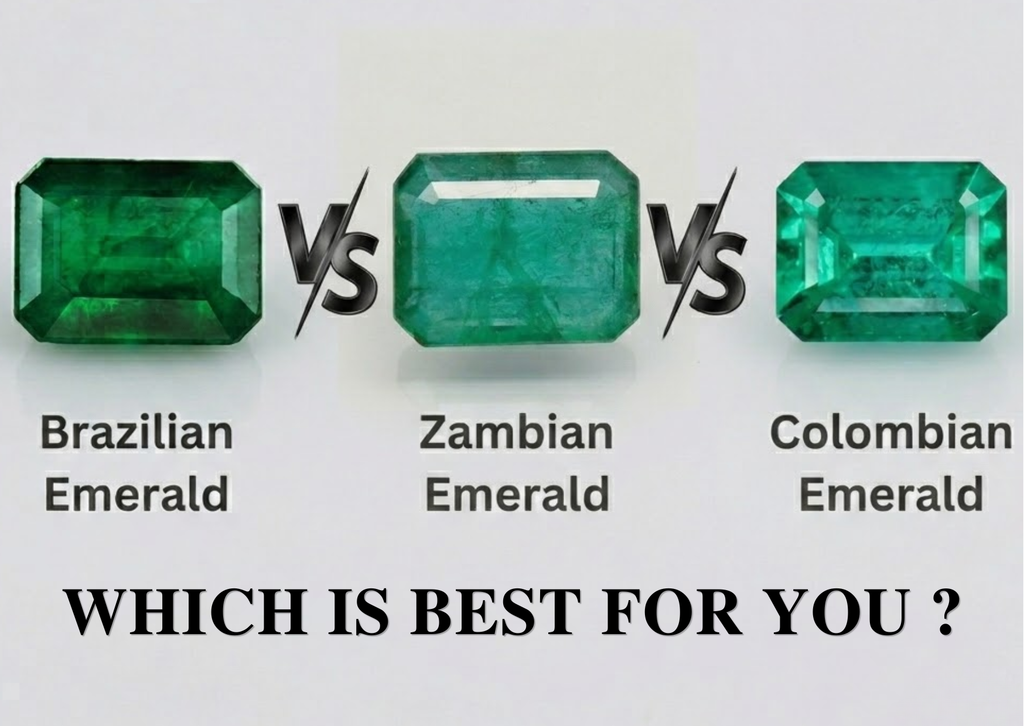
Color Profile: Colombian emeralds are famous for their warm, intense, and pure "leaf green" hue. They typically lack the blue or yellow overtones found in other origins, offering a vivid saturation that seems to glow from within.
-
Inclusions: In the world of emeralds, inclusions are called jardins (French for "gardens"). Colombian stones often feature unique "three-phase inclusions" (tiny pockets containing liquid, gas, and a solid crystal), which experts use to verify their origin.
-
Market Value: Due to their prestige and the decreasing output of high-quality mines, Colombian emeralds command the highest price per carat in the global market.
-
SEO Keywords: Muzo Emeralds, Rare Colombian Emeralds, Investment Grade Emeralds, Pure Green Gemstones.
2. Zambian Emeralds: The Modern Rival
Zambia has emerged as a powerhouse in the gemstone industry, particularly from the Kagem mine. Zambian emeralds offer a sophisticated alternative to Colombian stones, often boasting superior clarity.
-
Color Profile: These emeralds usually have a higher iron content, which gives them a cool, bluish-green undertone. This depth of color is often compared to the lush shades of a deep forest.
-
Clarity & Structure: Zambian stones generally have fewer surface-reaching inclusions and better transparency than their Colombian counterparts. Their crystal structure is also sturdier, making them slightly less prone to chipping during the cutting and setting process.
-
Market Value: While still high-end, Zambian emeralds are often more competitively priced than Colombian stones, offering excellent "value for beauty" for those who prefer a deep, saturated green.
-
SEO Keywords: Zambian Emerald Clarity, Bluish Green Emeralds, Kagem Mine Gemstones, Durable Emerald Jewelry.
3. Brazilian Emeralds: The Versatile Beauty
Brazil became a significant player in the emerald market in the 1960s, with major deposits in Minas Gerais and Bahia. Brazilian emeralds are incredibly diverse, ranging from commercial-grade stones to world-class specimens.
-
Color Profile: Brazilian emeralds are often characterized by a yellowish-green or "minty" tint. While they may not always reach the deep saturation of a Colombian stone, they offer a bright, lively sparkle that looks stunning in contemporary jewelry designs.
-
Unique Features: Brazil is known for producing "Cat’s Eye" emeralds—a rare phenomenon where light reflects off needle-like inclusions to create a slit across the stone.
-
Market Value: Brazil is the go-to source for high-quality, ethically sourced emeralds that are accessible for daily-wear jewelry. They offer a fantastic range for those looking for unique cuts and lighter, vibrant shades.
-
SEO Keywords: Brazilian Emerald Jewelry, Yellowish Green Emeralds, Minas Gerais Gemstones, Unique Emerald Cuts.
Colombian vs. Zambian vs. Brazilian: At a Glance
| Feature | Colombian | Zambian | Brazilian |
| Primary Hue | Vivid, Pure Green | Deep, Bluish-Green | Light to Medium Yellowish-Green |
| Clarity | Moderate (Visible Jardin) | High (Often Eye-Clean) | Varies (Great Transparency) |
| Trace Element | Chromium / Vanadium | Iron | Chromium / Iron |
| Prestige | Highest / Traditional | High / Modern | High / Versatile |
Which Origin Should You Choose?
The "best" emerald depends entirely on your personal style and goals:
-
For the Collector: A Colombian Emerald with an IIGJ or GJEPC certification is the ultimate prize for a luxury collection.
-
For the Modern Aesthetic: A Zambian Emerald offers a deep, regal look with exceptional clarity that shines in white gold or platinum settings.
-
For Everyday Elegance: A Brazilian Emerald provides a bright, refreshing pop of color that is perfect for rings and pendants meant for regular wear.
The Science Behind the Green: Chromium vs. Iron
What makes an emerald "green" is a fascinating mix of trace elements.
-
Chromium and Vanadium: These are the "magic" elements found in high concentrations in Colombian mines. They produce that iconic, glowing green.
-
Iron: Found more prominently in Zambian and Brazilian emeralds, iron adds a bluish tint and actually makes the crystal structure slightly more "stable" or hard.
Expert Tip: If a stone is too light in color, it is technically classified as "Green Beryl." Only stones with a deep enough saturation qualify as true Emeralds.
Understanding the "Jardin" (The Emerald Garden)
Emeralds are one of the few gemstones where internal inclusions are not only expected but often celebrated. These inclusions are called a Jardin.
-
Identifying Authenticity: Synthetic or lab-grown emeralds often look "too perfect." A natural Jardin proves the stone was formed over millions of years under intense tectonic pressure.
-
Durability Factor: When selecting a stone for an engagement ring or daily wear, ensure the inclusions do not reach the surface of the stone, as this can make the gem more susceptible to chipping.
The Importance of Enhancements (Oiling)
Nearly 99% of all natural emeralds undergo a process called "oiling." Since emeralds have tiny surface-reaching fissures, colorless oils (like cedar oil) are used to fill them, improving the stone's clarity.
-
Insist on Disclosure: When buying, always ask if the stone has Minor, Moderate, or Significant oiling.
-
Untreated Emeralds: "No Oil" emeralds are incredibly rare and can cost 3 to 4 times more than oiled stones of the same quality.
“At Tushar Gems, we provide 100% certified, astrologer-approved gemstones with 28+ years of trust — so you never risk wearing the wrong stone.”