Kashmir vs Ceylon Blue Sapphire: A Complete Comparison
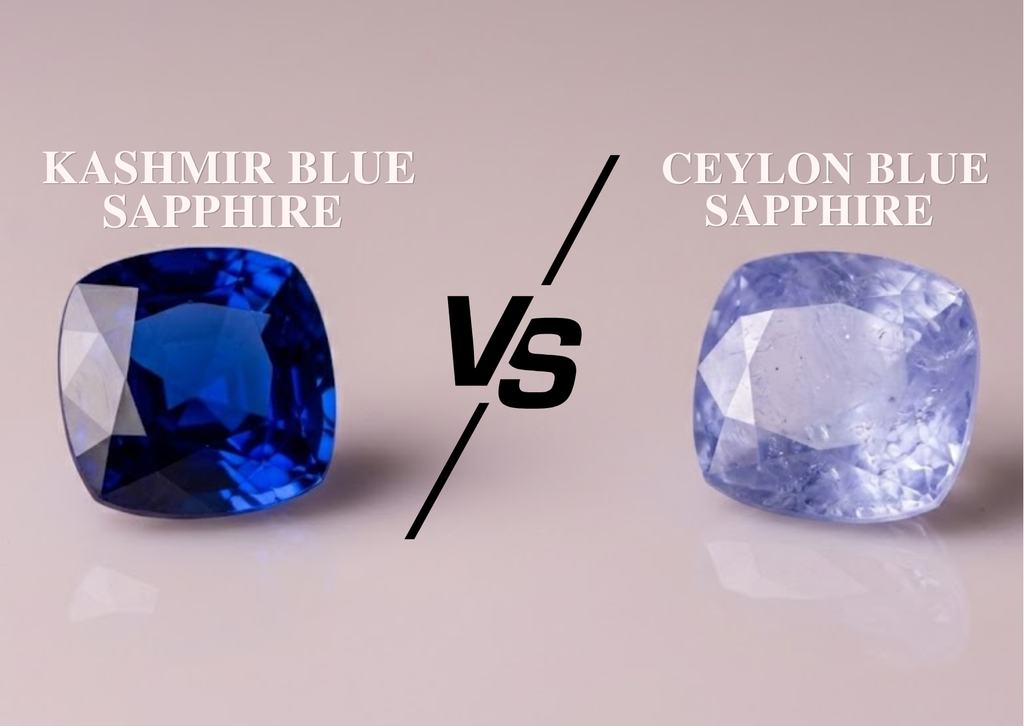
In the world of luxury gemstones, two origins stand above the rest when discussing the prestigious Blue Sapphire (Neelam): Kashmir and Ceylon (Sri Lanka). While both belong to the Corundum family, they occupy very different spaces in terms of aesthetics, rarity, and market value.
For collectors, investors, and jewelry connoisseurs, understanding the nuances between these two legendary origins is essential. Here is a comprehensive breakdown of the Kashmir vs. Ceylon Blue Sapphire debate.
1. The Legacy and Origin
-
Kashmir Blue Sapphires: Discovered in 1881 following a landslide in the Zanskar range of the Himalayas, these stones are the stuff of legends. The "Old Mine" was exhausted by 1887, meaning almost all genuine Kashmir sapphires in existence today are "heirloom" stones.
-
Ceylon (Sri Lanka) Blue Sapphires: Sri Lanka is the world’s oldest sapphire source, with a mining history spanning over 2,000 years. Known as the "Jewel Box of the Indian Ocean," it remains the most consistent producer of high-quality sapphires today.
2. Visual Characteristics: "Velvet" vs. "Brilliance"
The most significant difference lies in how these stones interact with light:
-
The Kashmir "Glow": Kashmir sapphires are world-renowned for their "Velvety" appearance. They contain extremely fine, microscopic silk inclusions (rutile needles) that scatter light. This creates a soft, "sleepy" glow that allows the stone to maintain its rich Cornflower Blue color even under low artificial light.
-
The Ceylon "Sparkle": Ceylon sapphires are generally more transparent and "cleaner" to the naked eye. They are celebrated for their incredible Brilliance and "life." While they lack the sleepy velvet of a Kashmir stone, they offer a vivid, electric Royal Blue that sparkles intensely under sunlight.
3. Rarity and Market Investment
-
Kashmir (The Auction King): Because mining has effectively ceased, Kashmir sapphires are considered "finite." They are the most expensive sapphires in the world, often fetching between $20,000 to $200,000+ per carat at prestigious auction houses like Christie’s or Sotheby’s.
-
Ceylon (Affordable Luxury): While top-quality "Vivid Blue" Ceylon stones can still be very expensive, the steady supply makes them more accessible. They offer the best value for those seeking a large, high-clarity stone for engagement rings or statement necklaces.
4. Technical Comparison Table
| Feature | Kashmir Blue Sapphire | Ceylon (Sri Lanka) Sapphire |
| Primary Hue | Rich Cornflower Blue | Vivid Royal Blue / Cornflower |
| Optical Effect | Soft, Velvety, "Sleepy" Glow | High Brilliance and Sparkle |
| Clarity | Naturally included (fine silk) | Generally high transparency |
| Rarity | Extremely Rare (Museum Grade) | Abundant but Premium |
| Price Point | Exponentially High | High to Moderate |
| Best Used For | Investment & High-End Collections | Bespoke Jewelry & Daily Wear |
5. Authentication and Lab Reports
In the high-end gemstone market, an Origin Report is non-negotiable. Because the price difference between a Ceylon and a Kashmir stone can be hundreds of thousands of dollars, a certificate from a world-class laboratory (such as GIA, IIGJ, or IGI) is required to confirm the geographic origin and ensure no "heat treatment" has been applied.
SEO Keywords Included in this Blog:
-
Primary Keywords: Kashmir vs Ceylon Blue Sapphire, Kashmir Sapphire investment, Blue Sapphire origin comparison, Ceylon Blue Sapphire price.
-
Secondary Keywords: Cornflower Blue Sapphire, Royal Blue Sapphire Sri Lanka, Velvety Blue Sapphire, Neelam stone origin, Investment grade gemstones.
-
Long-tail Keywords: Difference between Kashmir and Ceylon Sapphire, why is Kashmir sapphire so expensive, best origin for Blue Sapphire, certified natural Blue Sapphire.
-
The Signature "Velvet": What sets Kashmir apart is its unique texture. Microscopic inclusions known as "silk" scatter light within the stone, creating a soft, hazy, or "sleepy" appearance.
-
The Color: They exhibit a "Cornflower Blue"—a rich, intense blue that does not change under different lighting conditions. Whether in bright sunlight or a candlelit room, a Kashmir sapphire remains a vivid, glowing blue.
-
Investment Value: Today, these stones are almost exclusively found in museums or high-end auctions. Owning a Kashmir sapphire is like owning a piece of history; they are the ultimate investment-grade gemstones.
“At Tushar Gems, we provide 100% certified, astrologer-approved gemstones with 28+ years of trust — so you never risk wearing the wrong stone.”