

₹65,000 for a Yellow Sapphire That Was a ₹1,500 Citrine: Why Every Gemstone Needs a Certificate
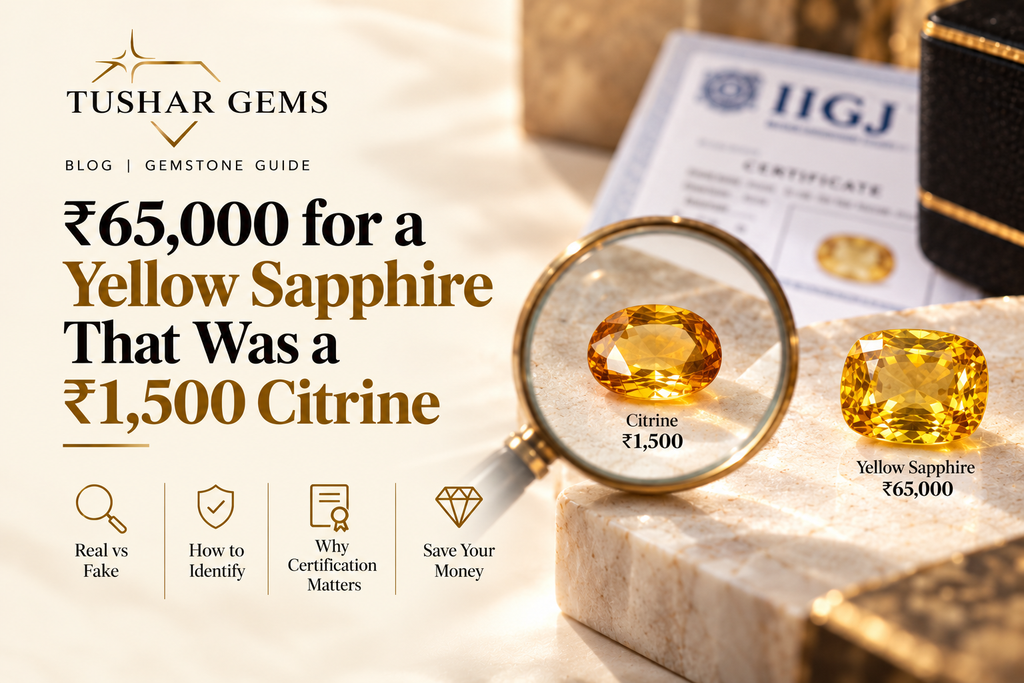
At an exhibition earlier this year, a jeweller from Patna walked up to the Tushar Gems stall. He was cheerful, proud of his trade, and keen to show our founder, Ravi Kapoor, the yellow sapphire (Pukhraj) he was wearing.
He had bought it for ₹65,000 from another jeweller, a friend he has dinner with every week. When Ravi Kapoor asked whether the stone came with a certificate, the answer was quick: “We meet every day. There was no need for a certificate.”
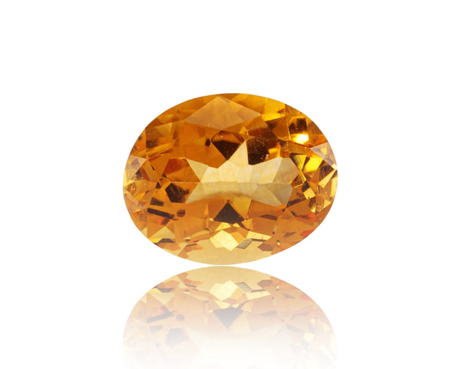
Ravi Kapoor looked at the stone and told him the truth. It was not a yellow sapphire. It was a Sunela, a citrine, worth around ₹1,500.
Ravi Kapoor shared this story in his recent interview on Kuch Ankaha with Yashika (Daily Diary News). His conclusion was simple:
“If jewellers are being misled by each other, think about the customer who comes in with only faith.”
Why a yellow sapphire and a citrine get confused
Both stones are yellow. To an untrained eye, a well-cut citrine can pass for a Pukhraj, especially under shop lighting. But they are very different stones:
| Yellow Sapphire (Pukhraj) | Citrine (Sunela) | |
|---|---|---|
| Mineral | Corundum | Quartz |
| Hardness (Mohs) | 9 | 7 |
| Planet in Vedic tradition | Guru (Jupiter) | Uparatna (substitute) for Pukhraj |
| Typical price range | Thousands to lakhs per ratti | A few hundred rupees per ratti |
Citrine is a genuine natural stone, and in tradition it is worn as an uparatna (substitute) for Pukhraj when the budget does not allow a yellow sapphire. There is nothing wrong with wearing it. What is wrong is paying the price of a Pukhraj for it.
The difference between the two cannot be judged by colour alone. It needs gemmological testing: refractive index, specific gravity, hardness and a look at the stone’s inclusions under magnification. That is exactly what a proper lab does.
“Trust” is not a test
For generations, Indian families have bought gemstones from the jeweller their parents trusted. That relationship matters. But as Ravi Kapoor put it in the interview:
“Reference ka time gaya. Authenticity ka time aaya hai.”
A long relationship does not tell you what a stone is. Even an honest seller can be wrong if he bought the stone without testing it himself. The Patna jeweller’s friend may never have meant to cheat him. He may simply not have known.
A certificate takes the guesswork out for both sides.
What a good certificate tells you
A gemstone report from a recognised lab should state:
- Identification: the stone’s species and variety (for example, “Natural Corundum, Yellow Sapphire”)
- Natural or synthetic: whether it formed in the earth or was grown in a lab
- Treatment: whether it has been heated, filled or otherwise treated
- Weight and measurements: carat weight and dimensions, so you can match the report to the stone in your hand
- A photograph of the stone
- A report number you can verify on the lab’s website
For a step-by-step guide, read How to Read a Gemstone Certificate.
Why we recommend IIGJ
Not every certificate is equal. A small local lab with a single person signing reports offers very little protection.
Ravi Kapoor recommends certification from IIGJ Research & Laboratories, which operates under GJEPC (the Gem & Jewellery Export Promotion Council, set up by the Ministry of Commerce). He has visited the lab himself. A stone passes through the hands of several trained technicians and modern testing equipment before a report is issued.
At Tushar Gems, natural gemstones are sold with lab certificates, IIGJ-certified stones are clearly marked, and the report number is shown on the product so you can check it before you pay. You can also verify a gemstone certificate on our website.
Before you buy any gemstone, ask three questions
- Who is selling it? Check the seller’s background, years in the trade and physical address. Authenticity of the seller comes first.
- Is there a certificate from a recognised lab? Not a printed card from an unknown name, but a report you can verify online with a report number.
- Does the report match the stone? Check the weight, measurements and photograph against the stone in front of you.
If the answer to any of these is unclear, wait. A real gemstone will still be there tomorrow. Your ₹65,000 may not.
The bottom line
A gemstone is not a ₹100 purchase. As Ravi Kapoor says, people put their hard-earned savings into it, often with deep faith. That faith deserves proof.
Never buy a gemstone without a certificate you can verify yourself.
Watch the full conversation: Kuch Ankaha with Yashika, featuring Ravi Kapoor.
Want a second opinion on a stone you already own, or help choosing the right one? Visit Tushar Gems at Gold Souk Mall, Sector 43, Gurugram, or Karol Bagh, New Delhi, or get a free gemstone recommendation.
Related guides from Tushar Gems
-
Posted in
buying guide, certification, citrine, pukhraj, yellow sapphire